
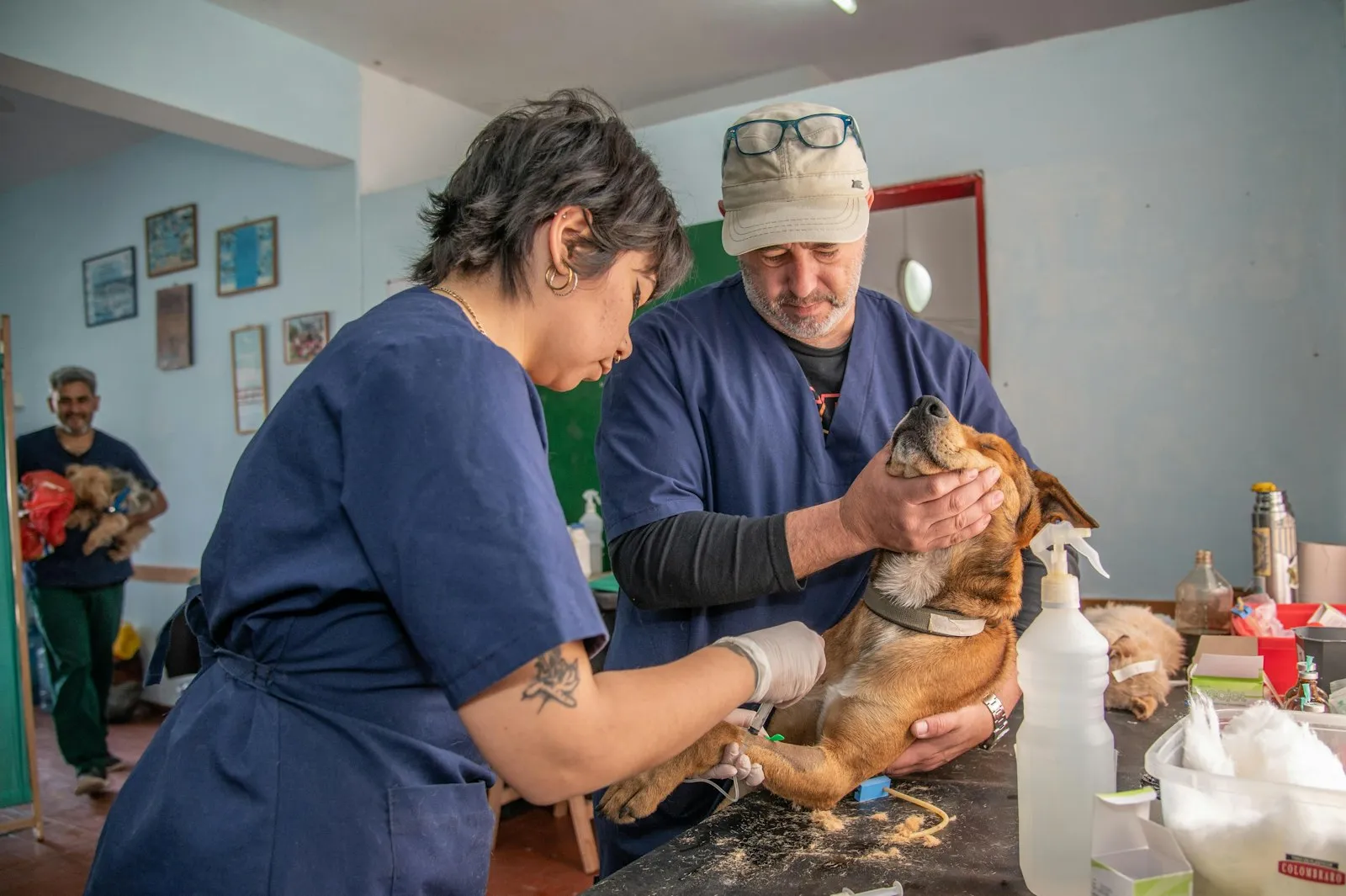

If you live on the Costa Blanca and have a dog, leishmaniasis is not a distant possibility: it is part of the landscape. We have already covered the 7 warning signs; here we get practical: how to prevent it, when the vaccine comes in, and how it works alongside the collar and the spot-on.
Why prevent it on the Costa Blanca
Leishmaniasis is spread by the bite of the sandfly, a tiny mosquito-like insect that needs warmth and humidity, conditions found all along the Mediterranean coast. In south-east Spain up to 46.6% of dogs test positive according to ESCCAP, one of the highest rates in the country. The highest-risk period runs from May to October, mostly at dusk.
It is worth being clear about this: any dog that goes out onto the street in an endemic area is exposed, even one that lives in a flat. That is why prevention is not optional. It is part of the basic care of a dog in Benidorm.
The vaccine: when and how
The leishmaniasis vaccine helps a dog’s immune system respond better if it comes into contact with the parasite. The key points:
- It is given from six months of age.
- Only after a blood test confirms the dog is negative. Vaccinating an already infected dog makes no sense.
- It involves an initial course followed by a yearly booster.
- The best time to start is early spring (March to April), before the sandfly peaks.
Vaccine, collar or spot-on
A very common question: vaccine or repellent? The answer is that they do not compete, they complement each other.
- Repellents (collars and spot-ons): these are the first line of defence. They carry active ingredients that repel or kill the sandfly before it bites. They should be kept up throughout the risk season.
- Vaccine: an extra layer of protection that acts on the dog’s response, not on the insect. It does not replace the repellent.
The most effective approach is to combine both. The repellent cuts down bites; the vaccine helps the dog defend itself better against any that get through.
The prevention plan
We design each dog’s prevention in the consultation, but the general outline is simple:
- Rapid in-clinic test (result in about 15 minutes) to confirm the dog is negative.
- Repellent (collar or spot-on) kept active throughout the risk season.
- Vaccine after the negative test, with its course and yearly booster.
- Yearly check with a serological test, ideally in March or April.
Cutting down exposure at dusk and using window screens at home helps, but does not replace the above. If your dog does not yet have a prevention plan, now is the time to put one in place: the sandfly season is just around the corner.
Frequently asked questions.
When is the leishmaniasis vaccine given?
From six months of age, and only after a blood test confirms the dog is negative. It involves an initial course followed by a yearly booster. The best time to start is early spring (March to April), before the sandfly becomes most active.
Does the vaccine replace the collar or the spot-on?
No. Repellents (collars and spot-ons against the sandfly) are the first line of defence and should be kept up throughout the risk season. The vaccine is an extra layer of protection, not a substitute. The ideal is to combine repellent, vaccine and a yearly check.
How much does the leishmaniasis vaccine cost?
The cost depends on the dog and on whether the prior blood test is needed, so we go through it with you in the clinic after assessing your dog. More important than the cost of a single year is understanding that full prevention (repellent plus vaccine) works out far cheaper and far safer than treating the disease.
Does my dog need the blood test before being vaccinated?
Yes, it is essential. We have to confirm the dog is negative before vaccinating, because vaccinating an already infected dog makes no sense and can muddle the diagnosis. We run a rapid in-clinic test, with a result in about 15 minutes.
Sources.
- ESCCAP España — Canine leishmaniasis prevention. Seroprevalence.
- Por un Mundo sin Leishmaniosis — Epidemiological data and prevention in Spain.
- ICOVAL — Official College of Veterinarians of Alicante.
Get your dog ready before the season
We run a rapid in-clinic test and design their prevention: repellent, vaccine and yearly check. The ideal is to start before the sandfly peaks.