Veterinary internal medicine in Benidorm to get to the cause.
Diagnosis and treatment of diseases of the internal organs in dogs and cats, with our own lab, ultrasound and digital X-ray. We look for the cause, not just the symptom.

What is internal medicine and when does your pet need it?
Internal medicine is the speciality that deals with diseases of the internal organs. It doesn't look at a single organ: it studies how the body's systems relate to one another, which is key in complex cases, chronic illness or when the symptoms are vague.
Its great strength is detecting disease at an early stage, when treatment is simpler and more effective. We treat digestive, respiratory, endocrine, kidney, blood and infectious disorders such as leishmaniasis.
- Loses appetite or weight for no obvious reason.
- Vomits or has diarrhoea repeatedly.
- Coughs or has difficulty breathing.
- Is listless or low in energy, with behavioural changes.
- Drinks and urinates far more than usual.
How we do it at our clinic
Clinical history and examination
A thorough first assessment to guide which systems to investigate.
Blood and urine tests
Haematology, biochemistry and hormone panels to assess the kidneys, liver, pancreas and thyroid. Fast results thanks to our in-house lab.
Diagnostic imaging
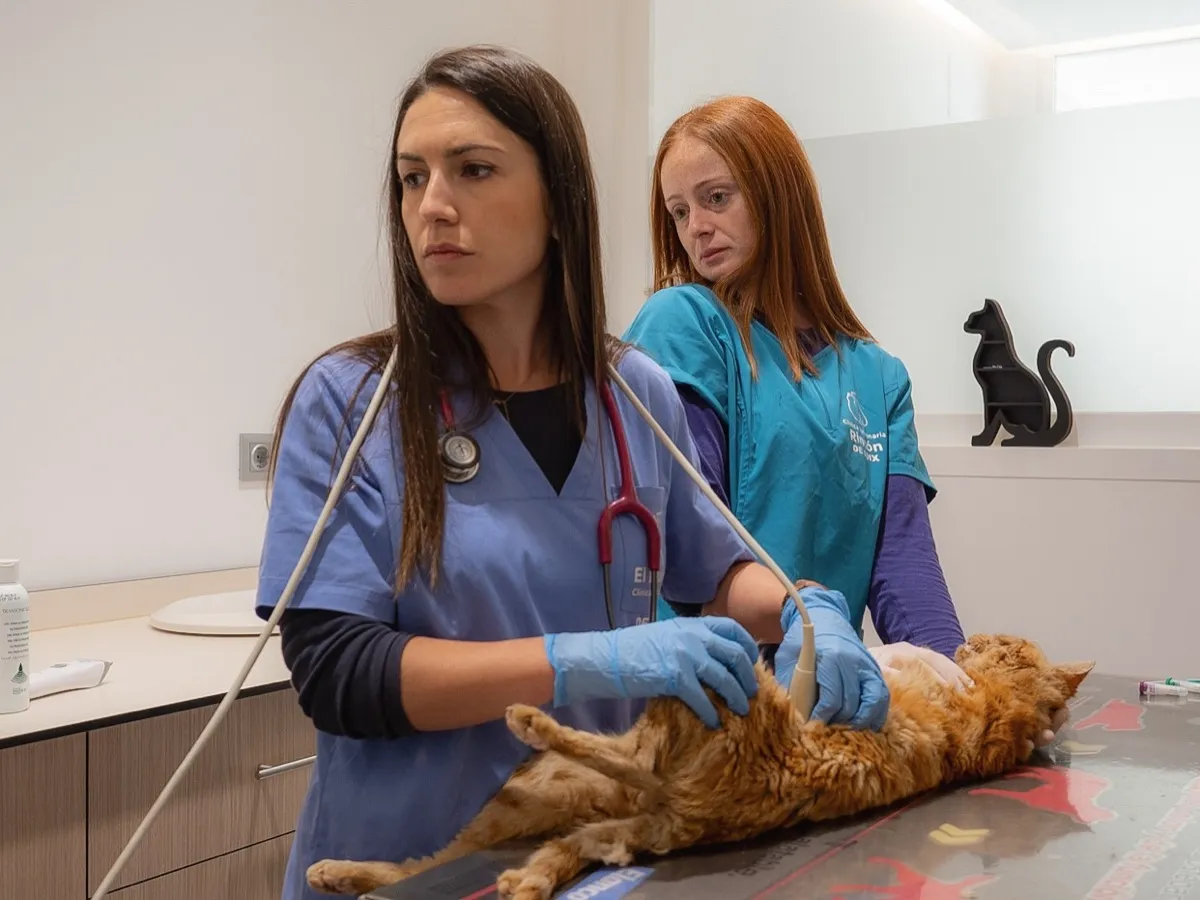
Abdominal and chest ultrasound and digital X-ray to see the organs in detail and locate masses or free fluid.
Specific tests if needed
Cytology, biopsy or endoscopy to confirm the diagnosis without unnecessary procedures.
Individualised treatment plan
Tailored to each patient, with diet and medication adjustments according to the condition.
Day inpatient care if required
For fluid therapy, intravenous medication or ongoing monitoring, under the team's supervision.
How much does it cost and how long does it take?
In chronic conditions (kidney disease, diabetes, thyroid) regular follow-up is part of the treatment. We guide you through each step and its cost.
What you need to know.
Before
- If we tell you to, fast beforehand for some blood tests.
- Bring any previous reports or treatments if you have them.
- Note since when you've noticed the symptoms and how often.
After
- A written treatment plan and dietary guidance if appropriate.
- A check-up schedule for chronic conditions.
- Access to the team to answer questions during treatment.
Frequently asked questions.
What's the difference between internal medicine and a normal consultation?
Internal medicine deals with diseases that affect several body systems at once, not just one organ. It lets us study how different conditions relate to each other and take a whole-body approach, which is very useful in complex or chronic cases.
When should I turn to internal medicine?
When your pet has symptoms that persist or don't add up: recurrent vomiting or diarrhoea, loss of appetite or weight, coughing or difficulty breathing, lethargy, or drinking and urinating far more than usual. These are signs of possible internal disease.
Which tests are used for diagnosis?
Blood and urine tests, hormone panels, abdominal and chest ultrasound, digital X-ray and, when needed, endoscopy, cytology or biopsy. We have our own lab, so many results are ready the same day.
Might my pet need inpatient care?
Yes, in some cases. We offer day inpatient care to give fluid therapy, intravenous medication or closer monitoring, with constant supervision from the team.
Is internal medicine also useful for prevention?
Very much so. We recommend annual check-ups, especially for pets over 7 years old or with a relevant history. Spotting a disease before it shows symptoms makes the difference between managing it well and facing a serious complication.
Care for your pet with peace of mind.
We give you a fixed quote after the assessment. No surprises, no rush.