Veterinary orthopaedics in Benidorm to restore mobility.
Orthopaedic surgery and trauma care with a visiting specialist at our premises. Fractures, dysplasia and ligament injuries, with digital X-ray diagnosis and rehabilitation afterwards.
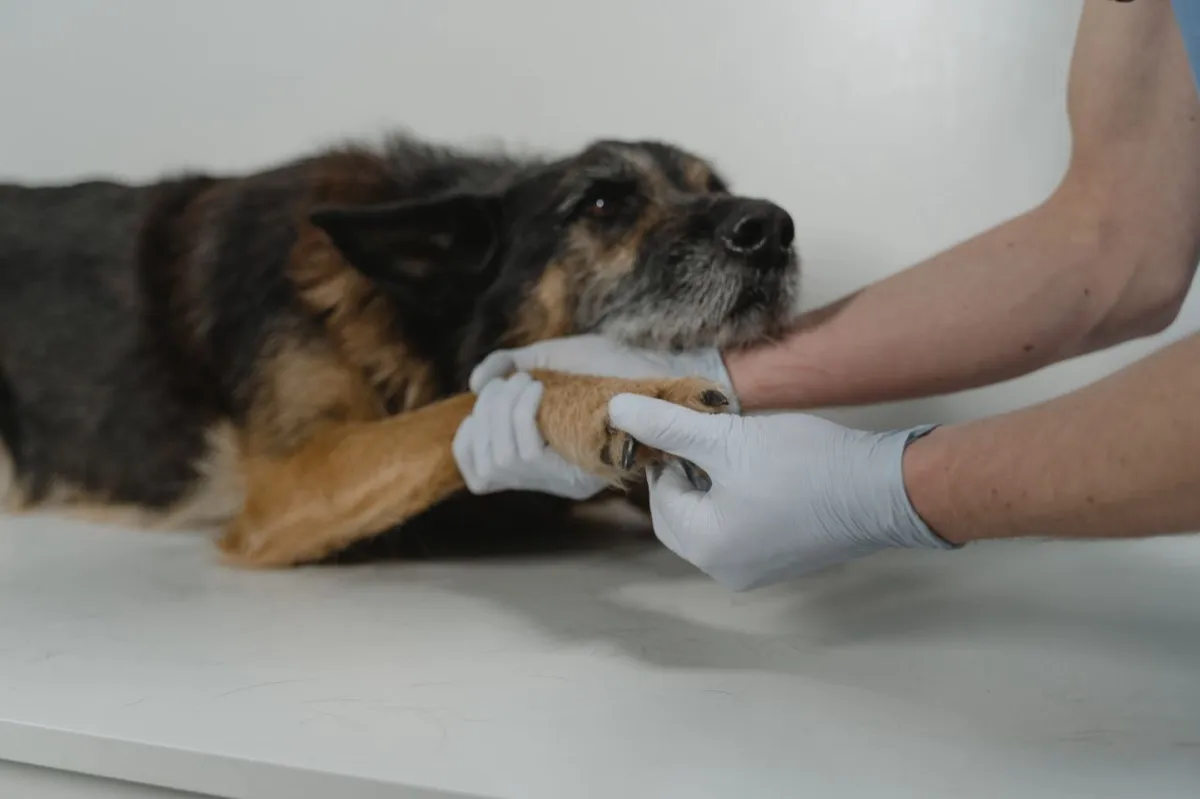

What is veterinary orthopaedics and when should you come in?
Veterinary orthopaedics treats conditions of the musculoskeletal system: bones, joints, tendons and muscles. It calls for a good understanding of animal biomechanics, which is why a visiting specialist handles it at our premises.
We don't stop at repairing the visible injury: we aim for a full functional recovery to prevent lasting effects and chronic pain. We treat everything from acute injuries to age-related joint disease.
- Limps for more than 24 hours or on and off.
- Struggles to get up, especially after resting (cold-start lameness).
- Changes its posture: sits oddly or arches its back.
- Refuses to exercise: no longer jumps onto the sofa or climbs stairs.
- Yelps when touched on a leg or the spine.
- Has had a knock or a fall: it's worth ruling out hairline fractures or internal injuries.
How we do it at our clinic
Advanced diagnostic imaging
High-definition digital X-ray to see bones and joints clearly and plan the surgery in detail.
Assessment by the specialist
The orthopaedic surgeon decides the best option for each case, surgical or conservative.
Conservative management when possible
Bandages or splints, joint supplements, pain and weight control. We opt for the least invasive option that heals.
Orthopaedic surgery when needed
A fully equipped, monitored theatre for fractures, joint surgery and corrections, with plates, screws or fixators.
Post-surgical monitoring and rehabilitation
Monitoring of the wound and bone healing, with a rehabilitation plan to recover muscle and mobility.
How much does it cost and how long does it take?
We show you the X-rays and explain the options (surgical and non-surgical) so you can decide with all the information. Fixed quote after the assessment.
What you need to know.
Before
- Limit the animal's movement until the appointment so as not to worsen the injury.
- Bring any previous reports or X-rays if you have them.
- Fast beforehand if the assessment might require sedation or surgery.
After
- Rest and follow-up X-rays during healing (which usually takes 6-8 weeks).
- A rehabilitation plan and guidance for home.
- Weight and pain control during recovery.
Frequently asked questions.
How long does a dog take to recover from bone surgery?
It varies with the injury and the age, but bone healing usually takes between 6 and 8 weeks. During that time, rest and follow-up X-rays are essential to check that everything is progressing well.
Does my dog with dysplasia definitely need surgery?
Not always. It depends on the degree of dysplasia and the symptoms. Many dogs lead a normal life with conservative management, weight control and joint supplements. We only operate when it's genuinely necessary to improve their wellbeing.
Do you offer treatments without surgery?
Yes. For mild injuries or in older animals, we often opt for conservative treatments: immobilisation, pain management and functional rehabilitation. We always look for the least invasive option that ensures healing.
Do you provide rehabilitation after surgery?
Yes. We design personalised rehabilitation plans with therapeutic exercises, joint mobilisation and guidance for home, to recover muscle mass and range of movement and reduce the risk of relapse.
Who operates on my pet?
Orthopaedics is handled by orthopaedic surgeon Rafael Tudela Espí, a visiting specialist who operates at our premises, with our team taking care of the anaesthesia, the monitoring and the follow-up. This way we combine specialisation with the continuity of your trusted clinic.
Care for your pet with peace of mind.
We give you a fixed quote after the assessment. No surprises, no rush.