
Veterinary surgery in Benidorm, planned and safe.
Planned procedures with monitored anaesthesia and post-operative follow-up. From spaying and neutering to abdominal and oncological surgery.
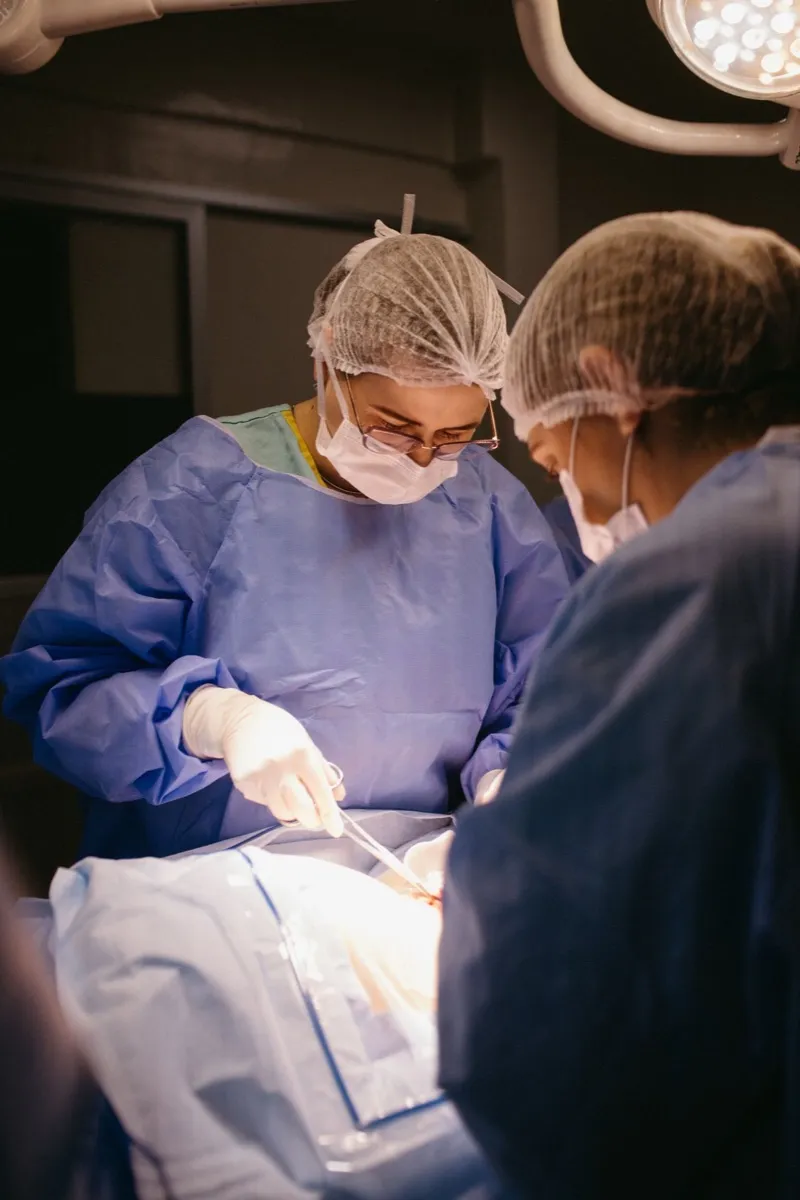

What surgery do we do and when does your pet need it?
Veterinary surgery ranges from routine procedures, such as neutering, to complex soft-tissue, oncological and orthopaedic operations. We have a fully equipped theatre for both planned and emergency cases.
Every operation is a delicate moment for the pet and its family. That's why we work with a prior work-up, safe anaesthesia and close follow-up, explaining every step to you.
- It needs spaying or neutering for health reasons or reproductive control.
- It has a lump or mass on the skin, in the mammary glands or internally that should be removed and analysed.
- It has an emergency such as a serious wound, gastric torsion or a difficult caesarean.
- It has an orthopaedic problem: a fracture, dislocation or cruciate ligament rupture.
- It needs dental or oral surgery with extractions under anaesthesia.
How we do it at our clinic
Assessment and pre-operative work-up
A full examination and, depending on the case and age, blood tests, X-ray or ultrasound to reduce the anaesthetic risk.
Safe, monitored anaesthesia
Modern protocols with constant monitoring of breathing, heart rate, oxygen saturation and blood pressure.
Surgery in a fully equipped theatre
Using techniques tailored to each procedure, prioritising precision and the least possible bleeding.
Pain management
Pain relief during and after surgery so your pet doesn't suffer unnecessary pain.
Recovery and, if needed, inpatient care
For straightforward surgery, discharge is usually the same day; for complex or emergency cases, admission with monitoring.
Post-operative follow-up
Check-ups to monitor recovery, remove stitches and answer questions, with clear written guidance.
How much does it cost and how long does it take?
We give a fixed quote after the prior assessment. For patients over 7 years old we recommend a pre-anaesthetic blood test to ensure safety.
What you need to know.
Before
- Fasting for 8 to 12 hours before surgery (water as advised).
- Review of regular medication with the team.
- A pre-anaesthetic blood test for older or higher-risk patients.
After
- Written post-operative guidance and pain management at home.
- A cone collar to stop them licking the wound.
- Check-up and stitch removal at 7-10 days for routine surgery.
Frequently asked questions.
How much does it cost to spay or neuter my dog or cat?
The price depends on the species, sex, weight and technique. We give a fixed quote after the prior assessment, which includes monitored anaesthesia, medication and a check-up. Call us on +34 865 78 00 50 and we'll talk you through it.
Is surgery safe for my pet?
Yes. We carry out a full pre-operative work-up (blood tests and, if needed, X-ray or ultrasound) to confirm your pet is fit for surgery, and we use modern anaesthetic protocols with constant monitoring throughout the operation.
What tests does my pet need before surgery?
A prior assessment and, in most cases (especially for those over 7 years old), a pre-anaesthetic blood test to detect any liver, kidney or heart problems before the anaesthesia.
How should I prepare my pet before surgery?
Usually fasting for between 8 and 12 hours to avoid complications with the anaesthesia. We'll give you specific instructions based on the type of operation and your pet's state of health.
How long does recovery take?
It depends on the procedure. A neutering usually takes 7 to 10 days with an almost normal routine; orthopaedic surgery needs several weeks and stricter care. We give you clear written post-operative guidance.
Will my pet have to stay in?
For minor surgery it usually isn't necessary and they go home the same day. For complex or emergency operations we recommend a period of inpatient care for safer monitoring.
Care for your pet with peace of mind.
We give you a fixed quote after the assessment. No surprises, no rush.