
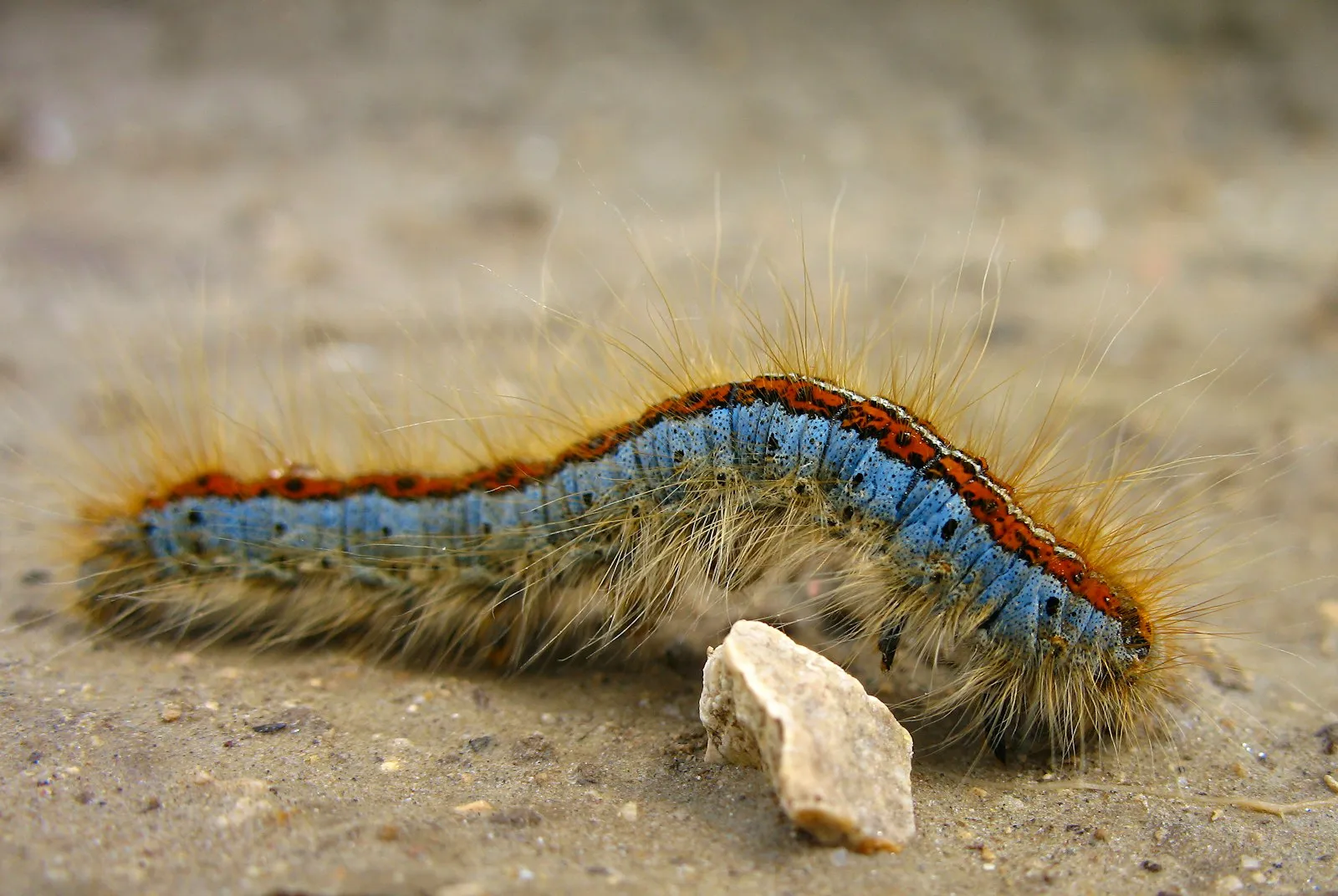

The pine processionary caterpillar is one of the most serious and least known dangers of spring on the Costa Blanca. Contact that looks minor can turn into a life-threatening emergency for your dog within minutes. Knowing how to recognise it and, above all, what to do at once, makes all the difference.
What the processionary caterpillar is
The processionary caterpillar (Thaumetopoea pityocampa) lives in pine trees and forms white, cotton-like nests among the branches. Between January and May, depending on the weather, it comes down from the tree in single file (hence the name) to bury itself in the ground. That is when a dog runs into it on a walk.
The danger lies in the thousands of stinging hairs that cover its body. They release a very potent toxin that causes a violent inflammatory reaction the moment it is touched. The dog does not need to bite it: contact alone is enough, and because dogs sniff and lick it off the ground, the damage tends to be concentrated on the tongue and mouth.
Signs in your dog
The signs come on very fast, sometimes within minutes:
- Sudden, heavy drooling, often the first thing you notice.
- A swollen tongue, which may change colour.
- Rubbing the mouth with the paws or against the ground because of the pain and itching.
- Vomiting and clear distress.
- Dark patches on the tongue: a sign of necrosis, which can lead to losing part of the tongue.
- In severe cases, difficulty breathing if the swelling reaches the throat.
- Rinse the mouth and the area of contact with plenty of water, warm if possible, without rubbing (rubbing breaks more hairs and releases more toxin).
- Protect your hands: the toxin affects you too.
- Do not give anything by mouth or apply home remedies.
- Come in to the vet straight away. Call ahead so we can prepare to treat your dog.
Prevention in Alicante
In areas with pines, such as Sierra Helada and many parks in and around Benidorm, prevention is key from January to May:
- Avoid pine woods during the risk season, especially after mild days, which is when they come down.
- Watch the ground on the walk: the caterpillars move in a line. If you see a procession, change your route.
- Keep your dog on the lead in pine areas so it cannot go over to sniff.
- Keep an eye on the white nests in the trees near you and let the council know if they are in parks.
ICOVAL, the College of Veterinarians of Alicante, usually publishes local alerts at the start of the season. If you live on the Costa Blanca, keep them on your radar: it is a very local seasonal problem that is worth taking seriously.
Frequently asked questions.
Why is the processionary caterpillar so dangerous for dogs?
Because its hairs are loaded with a stinging toxin (thaumetopoein) that triggers a very violent inflammatory reaction on contact. Dogs sniff and lick them off the ground, so the damage is usually on the tongue and mouth: they swell, drool heavily and, without prompt treatment, part of the tongue can become necrotic.
What do I do if my dog touches a processionary caterpillar?
Act at once. Rinse the area of contact (mouth, tongue, muzzle) with plenty of water without rubbing, ideally warm water, and protect your hands. Do not give anything by mouth or try home remedies. Then come in to the vet straight away: every minute counts to slow the swelling.
When is there processionary caterpillar activity in Alicante?
The risk runs mainly from January to May, when the caterpillars come down from the pines in single file to bury themselves. ICOVAL usually issues local alerts in these months. In areas with pines, such as Sierra Helada, take extra care on walks.
Sources.
- ICOVAL — Official College of Veterinarians of Alicante. Processionary alerts.
- AVMA — Toxicological emergencies in pets.
- Merck Veterinary Manual — Caterpillar and insect toxicoses.
If your dog has touched a processionary caterpillar, call us now
This is an emergency: the tongue can swell and become necrotic within minutes. Rinse the area with water and come in straight away. Call ahead so we can be ready for you.